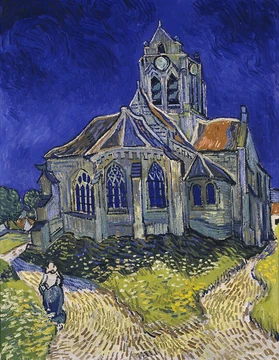
Genre painting
Painting of everyday life by ordinary people.

Genre painting, also known as petit genre, is a style of painting that depicts aspects of everyday life by portraying ordinary people engaged in common activities. It is distinguished from history painting (grand genre) and portraiture by showing figures to whom no identity can be attached individually or collectively, though the use of known models does not necessarily remove a work from the genre if it was not intended as a portrait. The depictions can be realistic, imagined, or romanticized, and have often proven popular with the bourgeoisie due to their familiar and frequently sentimental subject matter.
- field
- Painting
- known_for
- Depicting everyday life of ordinary people
- nationality
- Various (dominant in the Low Countries until the 18th century)
Lore & Background
Genre subjects appear in many traditions of art, from ancient Egyptian tomb decorations depicting banquets and agrarian scenes to Hellenistic panel paintings of 'low' subjects such as barbers' shops and cobblers' stalls, as mentioned by Pliny the Elder. Medieval illuminated manuscripts often illustrated scenes of everyday peasant life, notably in the Labours of the Months in books of hours. The Low Countries dominated the field until the 18th century, with Flemish and Dutch Golden Age painters producing numerous specialists in genre scenes. In the 16th century, Jan Sanders van Hemessen painted innovative large-scale genre scenes, often with moral or religious themes, while Pieter Aertsen and Joachim Beuckelaer placed cooks or market-sellers in the foreground with small religious scenes in the background. Pieter Brueghel the Elder made peasants and their activities the subject of many paintings.
Reader's Guide
Genre painting's significance lies in its shift of focus from grand historical or religious narratives to the everyday lives of ordinary people, making art accessible and relatable to the middle class. In the 17th century, Dutch and Flemish artists like Jan Steen and Adriaen Brouwer often embedded moral or symbolic meanings beneath realistic depictions, as seen in Steen's 'The Happy Family' with its cautionary note about children imitating parents. The Bamboccianti, inspired by Pieter van Laer in Rome, painted genre scenes of the Roman countryside, influencing Italian artists. In 18th-century France, Chardin and Greuze furthered realist and sentimental genre painting, while in England, William Hogarth used serial genre scenes for social commentary. The 19th century saw Realists like Gustave Courbet blur the boundary between genre and history painting by depicting everyday scenes on large canvases, and history painting itself began to include genre scenes in historical settings, as in the Troubador style. This evolution expanded the scope of genre painting, making it a vehicle for both moral instruction and social critique.
Did You Know?
- One common definition of a genre scene is that it shows figures to whom no identity can be attached either individually or collectively.
- The Dutch word for 'birds' (vogelen) was also a vulgar term for sexual intercourse, as seen in Gabriel Metsu's 'The Poultry seller'.
- Jan Steen's 'The Happy Family' includes a note reading 'So de ouden songen, so pijpen de jongen' ('As the Old Sing, So the Young Pipe').
- Pieter van Laer was nicknamed 'Il Bamboccio', meaning 'ugly doll' or 'puppet', and his followers were called the Bamboccianti.
Defining the Boundaries of Everyday Art
Genre painting, sometimes called petit genre, centers on ordinary people performing common activities without any identifiable individual or collective identity. This is what separates it from history paintings (grand genre) and portraiture. Even when an artist used a known person—perhaps a family member—as a model, the work could still qualify as genre if the artist's intent was not to present a portrait. That intent question can be subjective. The depictions themselves range from strictly realistic to imagined or romanticized. Because the subject matter is familiar and often sentimental, genre works have historically attracted the middle-class or bourgeois viewer. The tradition stretches back remarkably far: ancient Egyptian tomb decorations show banquets and agrarian life; Pliny the Elder references the Hellenistic painter Peiraikos, whose "low" subjects—barbershops, cobblers' stalls, asses, foodstuffs—survive in Pompeii mosaics and provincial wall paintings. Medieval books of hours, especially the Très Riches Heures du Duc de Berry, illustrated peasant labor in their calendar sections.
The Low Countries and the Rise of Specialized Genre Masters
From the early 1500s through the 1700s, the Low Countries led the genre field. Jan Sanders van Hemessen broke new ground in the first half of the 16th century with large-scale genre scenes that sometimes wove moral or religious narratives into the background, reflecting a broader "Mannerist inversion" in Antwerp that elevated previously decorative "low" elements to prominence. Pieter Aertsen and Joachim Beuckelaer followed with foregrounds of cooks and market-sellers surrounded by abundant produce, while small religious scenes peeked through background gaps. Pieter Brueghel the Elder naturalistically centered peasants and their labors. The 17th century produced a remarkable roster of specialists—Adriaen and Isaac van Ostade, Jan Steen, Adriaen Brouwer, David Teniers, Joos van Craesbeeck, Gillis van Tilborgh, Aelbert Cuyp, Willem van Herp, David Ryckaert III, Jacob Jordaens, Johannes Vermeer, and Pieter de Hooch. Their typically small canvases were perfectly suited to the parlors of middle-class buyers.
Beneath the Surface — Morality, Symbolism, and Wit
The surface realism of 17th-century Dutch and Flemish genre work often conceals a second layer of meaning. Adriaen Brouwer painted genre portraits representing the five senses or the seven deadly sins—his group painting The Smokers, for instance, stands for the sense of taste. Jacob Jordaens had explored similar themes roughly three decades earlier. Recurring subject types included the merry company at a tavern or home, market scenes, village kermesse festivities, and soldiers in their guardrooms.
From Rome to Paris — Genre Painting Crosses Borders
He joined the Bentvueghels, a loose society of Flemish and Dutch artists in the city, and earned the nickname "Il Bamboccio" (ugly doll or puppet). A circle of painters—Andries and Jan Both, Karel Dujardin, Jan Miel, Johannes Lingelbach, Sébastien Bourdon in his early years, Michiel Sweerts, Thomas Wijck, Dirck Helmbreker, Jan Asselyn, Anton Goubau, Willem Reuter, and Jacob van Staverden—followed van Laer's lead in depicting Roman countryside life and became known as the Bamboccianti. Their work in turn inspired Italian artists such as Michelangelo Cerquozzi, Giacomo Ceruti, Antonio Cifrondi, and Giuseppe Maria Crespi. In France, Louis le Nain painted groups of peasants at home in the 17th century, while the 18th century saw a surge of interest in everyday life through the romanticized works of Watteau, Lancret, Jean-François de Troy, and Fragonard. Chardin is regarded as one of the century's realist genre painters, and Jean-Baptiste Greuze produced detailed, often sentimental group and individual scenes.
Frequently Asked Questions
What is Genre painting in visual arts?
Genre painting is a category of art devoted to scenes from daily life, showing regular people engaged in ordinary tasks such as cooking, trading, or socializing. It stands as one of the major divisions of the painted arts alongside history painting and portraiture.
How does Genre painting differ from portraiture or history painting?
The defining distinction is that genre scenes feature figures who are not meant to be identified as specific individuals, whether by name or by group. Even if a known person posed as a model, the work still counts as genre if the artist's intent was to depict a type rather than a particular person.
Which region was most closely associated with Genre painting?
The Low Countries (modern-day Netherlands and Belgium) dominated the production of genre works from roughly the 16th through the 18th century. Artists from that region established much of the visual vocabulary for domestic and street-level scenes that later spread across Europe.
What kinds of scenes does Genre painting typically depict?
Works in this category range from kitchen interiors and market stalls to tavern brawls and pastoral labor, capturing moments that feel immediate and unposed. The depictions can be strictly realistic, loosely imagined, or tinged with a romantic and sentimental mood.
Why did Genre painting become so popular with collectors?
The bourgeoisie in particular gravitated toward these works because the subjects mirrored their own domestic and social worlds, making the images feel personally familiar. Their warm, narrative quality gave viewers an accessible emotional entry point that grander historical subjects did not offer.
More in Painting & Visual Arts 1-20
Spotted an error? Know more?
This is a living reference — every entry is fact-audited, and reader corrections feed straight into our audit queue. Suggest an edit · See this site's audit record